 Artificially generated image
 Neck Ruffle Long Sleeve Fashion Loose Dresses: Elegant Comfort and Timeless Style
Fashion rarely earns the words practical and graceful at the same time, yet a neck ruffle long sleeve loose dress comes strikingly close. It offers movement, coverage, and polish without the rigidity that often follows sharply tailored pieces. In a wardrobe shaped by busy schedules, that mix matters because one dress can shift from desk hours to dinner with only a swap of shoes or jewelry. The sections below explain why the style stays relevant, how its details change the mood, and what smart shoppers should look for before buying.
Outline
- The design language behind the ruffled neckline, long sleeves, and relaxed cut
- How fabric, fit, and construction shape comfort, drape, and longevity
- Ways to style the dress for work, weekends, travel, and special occasions
- Comparisons with sheath, wrap, shirt, and fit-and-flare dresses
- Buying tips, care advice, and a conclusion for shoppers seeking versatile elegance
What Defines the Style and Why It Stays Relevant
At first glance, this dress style seems easy to describe: a neckline softened by ruffles, sleeves that provide coverage, and a silhouette that does not cling. In practice, however, those three elements create a surprisingly rich design language. The ruffle frames the face and adds motion near the neckline, which is one reason the dress often feels dressed up even before accessories are added. Long sleeves introduce balance, especially when the body of the garment is loose. The result is a shape that feels composed rather than plain, and expressive rather than loud.
The appeal also comes from its flexibility across fashion eras. High neck ruffles recall romantic and Edwardian influences, while looser bodies connect with bohemian dressing from the 1970s and the modern preference for comfort-first clothing. That blend of references helps the dress feel familiar without becoming dated. A sharply structured sheath can look formal, and a bodycon piece can feel occasion-specific, but a relaxed ruffle-neck dress often lands in the sweet spot between refined and wearable. It suits people who want clothing that has personality without demanding constant adjustment or careful posture.
- A narrow ruffle usually looks cleaner and more understated, making it easier for workwear.
- A fuller ruffle adds drama and softness, which can feel more romantic or festive.
- Straight sleeves create simplicity, while bishop or puff sleeves amplify movement and volume.
Length matters too. A knee-length version often reads practical and versatile, while midi lengths introduce a flowing, almost cinematic quality when walking. Fabric tension changes the mood again: crisp cotton gives the neckline definition, while viscose or chiffon lets it flutter. This is why two dresses with the same basic description can feel entirely different in real life. One may lean minimal, another vintage-inspired, and a third quietly luxurious.
Most importantly, the style respects real movement. It allows air, layers well, and usually accommodates long hours of wear more easily than tight silhouettes. When the fabric catches a breeze or the neckline moves as the wearer turns, the effect is subtle but memorable. It is the kind of dress that does not shout for attention, yet still leaves an impression, which is often the mark of lasting style.
Fabric, Fit, and the Real Mechanics of Comfort
Comfort in fashion is rarely about one feature alone. With a loose long sleeve dress, comfort is built from the relationship between fabric, cut, and construction. A beautiful neckline means little if the shoulder seam sits awkwardly, and a generous silhouette can still feel inconvenient if the cloth wrinkles instantly or traps heat. That is why the smartest way to evaluate this category is to look beyond the front photo and focus on how the material behaves on the body.
Cotton poplin is a strong choice for people who like definition. It is breathable, easier to care for than many delicate fabrics, and gives the ruffle enough shape to stay visible. Viscose or rayon drapes more fluidly and often feels softer against the skin, which makes it ideal for a relaxed, elegant effect. Linen blends are excellent in warm weather because they breathe well, though they usually wrinkle faster. Crepe offers texture and a more polished fall, while chiffon creates a light and airy finish but often needs lining to avoid transparency. Polyester blends are common in affordable fashion because they resist wrinkling and hold color well, but their breathability varies significantly depending on weave and thickness.
Fit deserves the same level of attention. A loose silhouette should feel intentionally easy, not accidentally oversized. The shoulder line is especially important. If the shoulder seam extends too far, the dress can look slouched rather than relaxed. The bust and hip areas need enough ease to skim the body without pulling, and sleeve openings should allow natural motion at the elbow and wrist. Even a small difference in measurements can change the experience of wearing the garment for several hours.
- Check whether the dress has lining if the fabric is pale or lightweight.
- Look for gathers placed evenly around the neckline, since uneven gathering can distort the front.
- Review sleeve cuff details, because elastic, buttons, and ties each create a different feel and shape.
- Read garment measurements, not only the size label, since sizing varies widely across brands.
Another overlooked factor is seasonality. A lined crepe midi with full sleeves may work beautifully in autumn, while a cotton voile version feels more sensible in spring and early summer. The best purchase is not the dress that looks nicest on a hanger, but the one whose fabric weight, opacity, and movement match the climate and the wearer’s routine. In other words, elegance begins with practicality. If a dress feels good from morning to evening, it is far more likely to become a favorite instead of a forgotten purchase.
How to Style It for Work, Weekends, Travel, and Events
One reason this silhouette keeps returning to modern wardrobes is that it adapts quickly. A single dress can feel professional, casual, or event-ready depending on styling choices, and that makes it particularly valuable for people who want fewer pieces with broader use. The trick is to decide which element should lead the outfit: the neckline, the sleeves, the print, or the accessories. When everything competes at once, the look can feel busy. When one feature takes the spotlight, the result is far more polished.
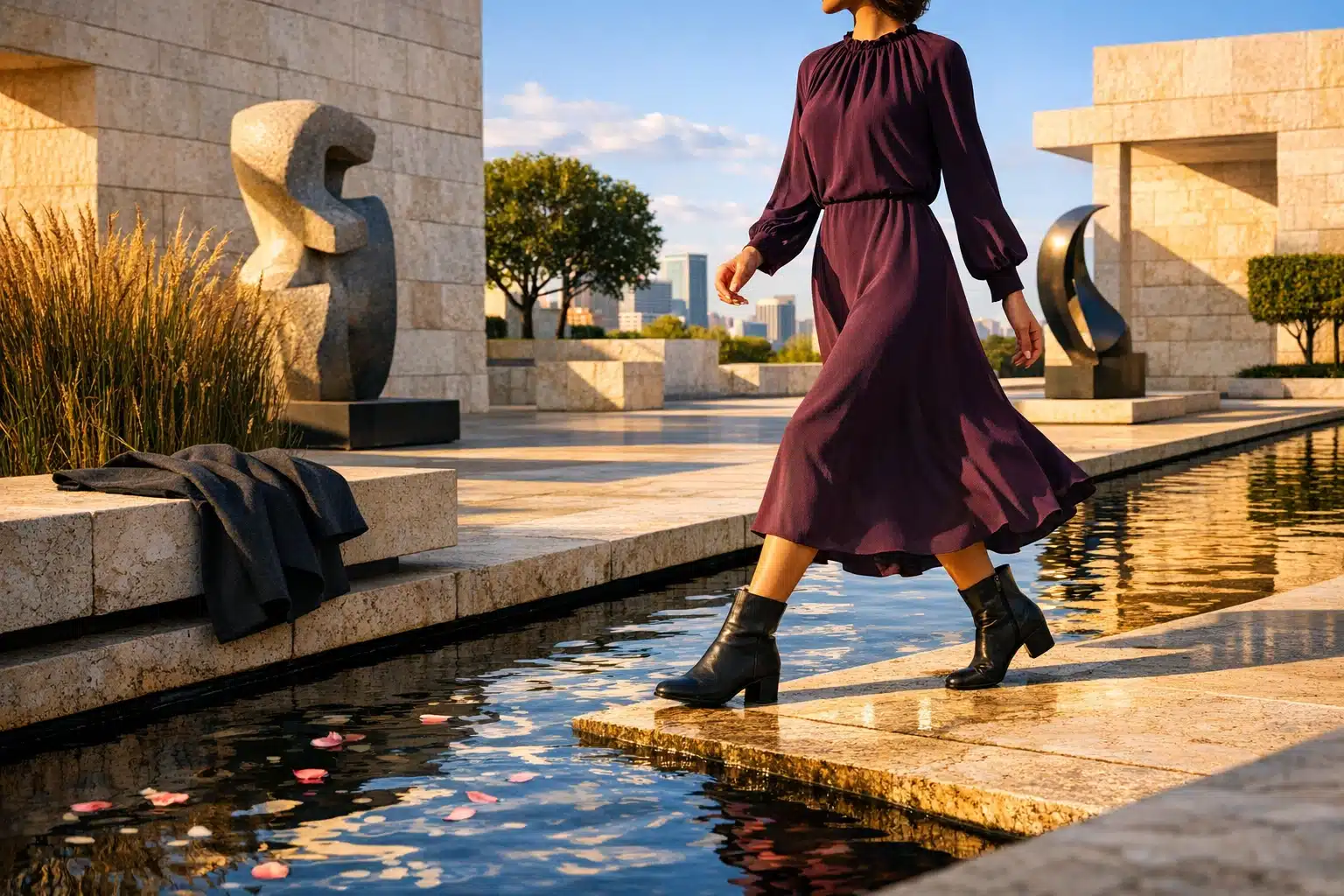
For office wear, cleaner fabrics and restrained ruffles work best. Think matte crepe, cotton poplin, or a subtle floral print paired with loafers, ankle boots, or low block heels. A structured tote and simple earrings usually provide enough finish without overwhelming the neckline. If the dress is very loose, adding a thin belt can create more definition, though many people prefer to keep the shape easy and let the vertical line of a longer hem do the work. In creative workplaces, a patterned dress with tall boots and a tailored coat can look especially strong.
For weekends, the same dress can relax almost instantly. Swap formal shoes for white sneakers, flat sandals, or suede boots. Add a denim jacket, a crossbody bag, and perhaps a textured knit if temperatures drop. This is where the loose cut proves its value. It allows movement, layers comfortably, and often feels appropriate for errands, lunch, travel days, and family gatherings without seeming underdressed. There is a quiet confidence in clothing that does not need constant fussing.
- For a polished daytime look: midi dress, leather belt, ankle boots, and a compact handbag.
- For casual wear: printed version, sneakers, denim jacket, and minimal jewelry.
- For evening: darker fabric, heeled sandals or boots, clutch bag, and one strong accessory.
Special occasions call for attention to fabric and finish rather than excessive decoration. Satin-touch weaves, chiffon overlays, richer jewel tones, and refined sleeve volume can elevate the dress for dinners or celebrations. Metallic earrings or a slim heel may be all that is needed. The neckline already provides movement, so there is rarely a need for heavy necklaces. In fact, leaving the neck area mostly clear often lets the ruffle do its best work.
Seasonal styling matters too. In cooler months, the dress pairs well with long coats, knee-high boots, and opaque tights. In warmer weather, lighter colors, rolled sleeves, and woven accessories keep it fresh. Few garments move this smoothly across settings, and that is why the style has earned a dependable place in modern fashion rather than a brief moment of trend-driven attention.
How It Compares With Other Popular Dress Silhouettes
Understanding this style becomes easier when it is placed beside other familiar dress categories. Comparison reveals not only what it looks like, but what kind of life it serves. A sheath dress, for example, is built around clean lines and a closer fit. It can appear highly professional and sleek, yet it usually offers less ease through the waist and hips. By contrast, a loose ruffle-neck dress is more forgiving in motion and often more comfortable for long days, travel, or mixed activities. It sacrifices some sharpness in exchange for softness and adaptability.
A wrap dress offers a different kind of versatility. It is famous for adjustability and waist definition, which makes it flattering for many body shapes. However, wrap styles can require more monitoring at the neckline and hem, especially in windy conditions or during active days. The ruffle-neck loose silhouette generally feels more secure and less demanding, especially for wearers who prefer coverage or do not want to think about pins and inner ties. It gives ease without feeling careless.
Shirt dresses share practical roots with this style, especially when made in cotton or poplin. Both can work in professional and casual settings. The difference lies in mood. Shirt dresses tend to feel crisp, utility-inspired, and slightly tailored, while a ruffled neckline introduces softness and decorative movement. One reads efficient; the other reads gently expressive. Neither is better in absolute terms, but they send different signals.
- Choose a sheath dress when precision and formality are the priorities.
- Choose a wrap dress when you want adjustable fit and a defined waist.
- Choose a shirt dress when you prefer structure and functional simplicity.
- Choose a ruffle-neck loose dress when you want comfort, coverage, and an elegant, fluid presence.
Fit-and-flare dresses are also worth mentioning. They create shape through a fitted upper body and wider skirt, which can feel lively and traditionally feminine. Yet that same structure can be less convenient for layering under coats or for relaxed all-day wear. The loose long sleeve version typically feels easier and less formal, though not less stylish. It simply relies on drape instead of waist emphasis.
In practical terms, the ruffled-neck silhouette is often the strongest choice for people who want one dress to cover several roles. It may not replace every occasion-specific garment, but it reduces the need for constant outfit changes. That efficiency matters. In a closet crowded by impulse purchases and single-use pieces, a dress that balances personality with daily usefulness offers a more thoughtful kind of style.
Buying Smart, Caring Well, and Choosing This Style for Your Wardrobe
Buying well starts with honesty about how the dress will be used. If it is meant for work, prioritize opacity, washable fabrics, and ruffle details that do not feel overly dramatic. If it is for events, you can afford to lean into texture, sheen, or more expressive sleeves. If travel is the goal, wrinkle resistance and easy layering should guide the purchase. These practical questions often matter more than trend language, because a garment that suits real routines will always provide more value than one chosen only for a passing aesthetic.
Construction details deserve careful attention. Look closely at the neckline and seams. Ruffles should sit evenly and feel integrated rather than tacked on as an afterthought. Buttons, if present, should be secure, and the placket should lie flat. A quality lining can improve comfort and confidence, especially in pale colors. Hem finishing also matters. A neat hem helps the dress swing properly and usually signals better overall craftsmanship. When shopping online, zooming in on stitching, reading fiber content, and checking return policies are not boring steps; they are the difference between a satisfying purchase and an expensive guess.
- Prioritize shoulder fit before judging the rest of the silhouette.
- Choose fabric according to climate, not only appearance.
- Consider sleeve cuffs carefully if you often push sleeves up during the day.
- Pick a length that works with the shoes you already own.
- Read care labels before purchasing delicate fabrics.
Care is simpler when handled early and consistently. Cotton and many blends usually benefit from gentle washing and prompt hanging to reduce wrinkles. Viscose often needs a softer approach because it can distort when wet. Chiffon and specialty fabrics may require hand washing or dry cleaning, depending on construction. Storing the dress on a supportive hanger helps maintain the neckline shape, and steaming is often kinder than aggressive ironing on gathered areas. These are small habits, yet they extend the life of a garment and preserve the very details that make it appealing.
For the target audience, the strongest argument is clear: this style works for people who want elegance without stiffness. It suits professionals who need polish, travelers who need flexibility, mothers and busy commuters who want ease, and anyone building a wardrobe around fewer but smarter choices. If you like clothing that feels feminine without fragility, relaxed without sloppiness, and expressive without noise, this silhouette deserves serious attention. A well-chosen version will not simply fill a gap in the closet. It will become the piece you reach for when you want to feel comfortable, capable, and unmistakably put together.