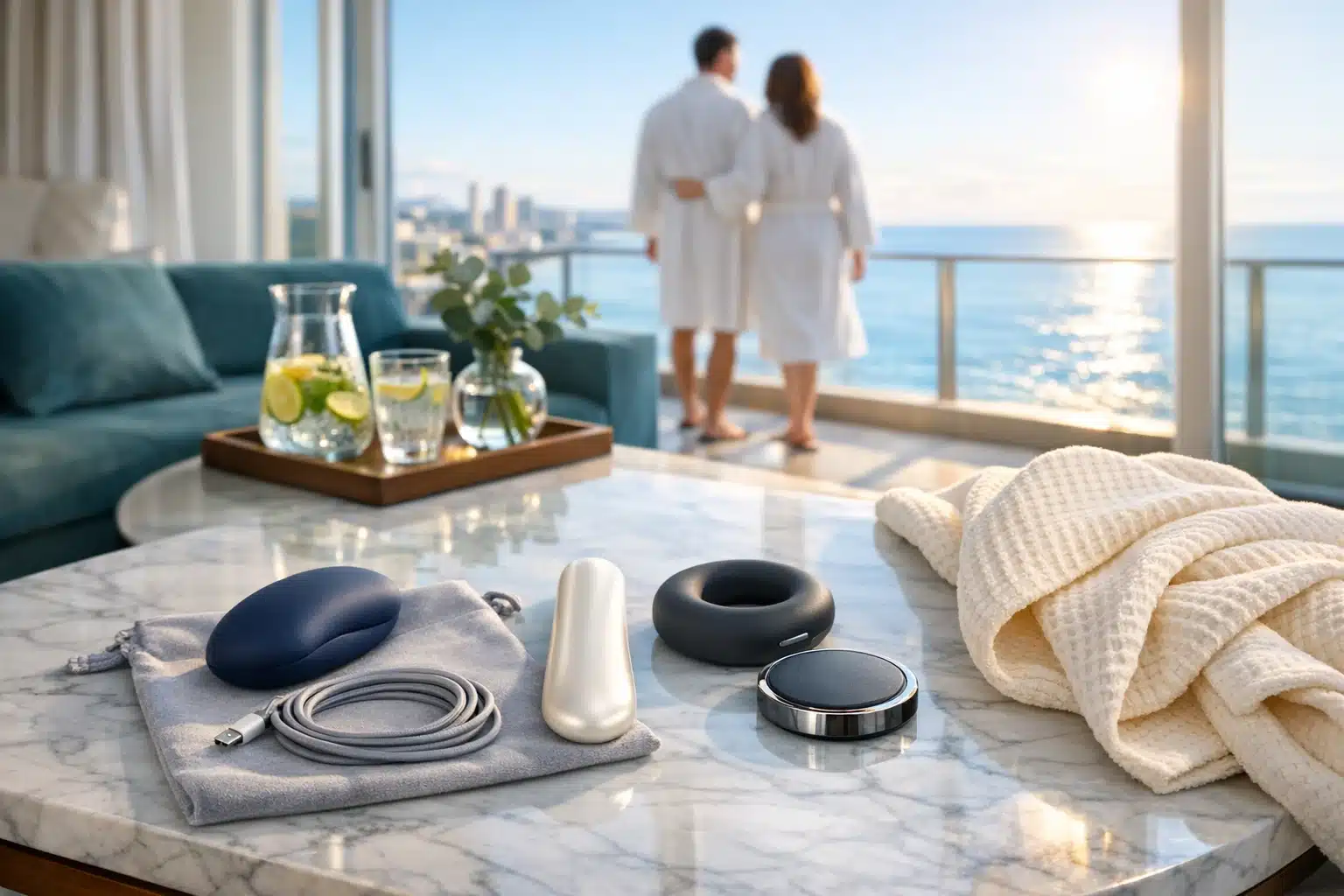
 Artificially generated image
 Top-Rated Vibration Relaxation Gadgets for Couples: A Practical Guide
Shopping for a vibration relaxation gadget as a couple can be surprisingly tricky. One person may want gentle stress relief, while the other may care more about quiet operation, simple controls, or a design that feels discreet and easy to store. Product pages often blur those differences. This guide cuts through that clutter with a practical look at gadget styles, materials, features, and buying habits that actually fit shared routines, comfort levels, and realistic budgets.
That matters because these products sit at the crossroads of wellness, convenience, and personal preference. A well-chosen gadget can become part of a wind-down ritual after work, a travel companion for hotel stays, or simply a small upgrade to how two people relax together at home. A poor choice, on the other hand, often ends up in a drawer after two uses, right beside the cables nobody can identify.
Article Outline
• How to judge whether a gadget is truly couple-friendly
• The main types of vibration relaxation gadgets and what each does best
• Materials, comfort, safety, and hygiene considerations
• Key feature comparisons, from battery life to app control
• Budget planning, communication, and a realistic final buying roadmap
1. What “Top-Rated” Really Means for Couples
When people see the phrase top-rated, they often imagine one clear winner, but couple-focused relaxation gadgets do not work like kitchen scales or phone chargers. There is no universal best choice because shared comfort is highly personal. A model that feels perfect for one pair may seem too buzzy, too bulky, too soft, or too complicated for another. In this category, a high rating usually reflects a combination of reliable build quality, intuitive controls, reasonable noise levels, and a design that feels approachable instead of awkward. In other words, top-rated often means easy to live with.
For couples, the first filter should be use case. Are you looking for a compact gadget for quick evening relaxation, a broader body massager for shoulders and legs, or a low-profile adult wellness device designed for shared use in a more intimate setting? These are very different products, even when they all use vibration. Once you define the role, comparisons become far more useful. Buyers who skip this step often end up comparing features that sound impressive but do not match how they actually plan to use the device.
It also helps to read reviews with a skeptical, practical eye. Five-star comments full of excitement can be useful, but the most revealing details usually sit in the middle ratings. That is where buyers explain real trade-offs: strong motor but louder than expected, excellent texture but harder to clean around seams, or great battery life but confusing button layout. Those details matter more than flashy packaging. A couple shopping together should pay close attention to the everyday factors that shape long-term satisfaction:
• comfort during use
• control placement and ease of adjustment
• surface material and grip
• charging method and battery consistency
• cleaning instructions and storage needs
• manufacturer transparency about waterproofing and warranty
Another smart move is to treat bold marketing language cautiously. “Powerful,” “whisper quiet,” and “ultimate” are common descriptions, but they mean little without context. A quieter motor may still sound noticeable in a silent bedroom. A very powerful setting may be unnecessary if the device lacks gradual intensity control. What couples usually value most is range: gentle starts, clear button feedback, a shape that suits different hand sizes, and a design that does not demand a learning curve worthy of a cockpit manual. The strongest gadgets are not automatically the best. The best ones are usually the easiest to share, understand, and trust.
2. The Main Types of Vibration Relaxation Gadgets and How They Compare
The market for vibration relaxation gadgets is broad, and the fastest way to make sense of it is to sort products by format rather than by hype. Broadly speaking, couples tend to compare five practical categories: handheld massagers, compact palm-style gadgets, wearable low-profile wellness devices, vibrating wraps or pads, and app-connected products that emphasize remote control or customization. Each category serves a slightly different mood, setting, and comfort level, so the right choice depends less on trendiness and more on how the gadget fits into daily life.
Handheld massagers are often the most versatile. They can be used on shoulders, calves, lower back, and other tension-prone areas, making them a sensible choice for couples who want general relaxation rather than a specialized experience. Their strengths are reach and flexibility, but they can be heavier, louder, and less travel-friendly than smaller designs. Palm-style devices are easier to hold, easier to tuck into a drawer, and often simpler to operate with one or two buttons. They work well when ease and discretion matter more than full-body coverage.
Wearable low-profile wellness gadgets occupy a different space. These are often designed for close-contact or body-hugging use and may appeal to couples looking for a more shared, hands-free relaxation option. The advantage is convenience and subtlety; the drawback is that fit can be highly individual. A shape that feels secure and comfortable for one person may feel off-balance for another. This is why dimensions, flexibility, and material softness deserve more attention than glamorous lifestyle photos.
Vibrating wraps, seat pads, and targeted cushions are usually the least ambiguous choice for home use. They are practical, often non-intimidating, and better suited to routine stress relief after work or during travel. Meanwhile, app-connected products are the most feature-rich on paper. They may offer pattern control, saved settings, or remote adjustments through a phone. For some couples, that adds fun and convenience. For others, it adds one more thing to charge, pair, update, and troubleshoot.
A simple comparison framework makes decisions easier:
• Handheld massagers: broad use, strong coverage, less discreet
• Palm-style gadgets: compact, beginner-friendly, limited reach
• Wearable wellness devices: shared and low-profile, but fit-sensitive
• Wraps and pads: practical for body relaxation, less portable
• App-connected models: customizable, but sometimes more complex than necessary
If there is one useful rule here, it is this: choose the format that matches your routine, not the one with the most dramatic product page. The best gadget for a busy couple may be the one that turns on quickly, feels comfortable in seconds, and never requires a debate about where the charging cable went.
3. Materials, Comfort, and Hygiene: Where Good Design Earns Its Reputation
Materials matter more than many first-time buyers expect. In the world of relaxation gadgets, the surface is not just a cosmetic detail; it affects grip, comfort, heat retention, cleaning, durability, and even how premium a product feels after a few months of regular use. High-rated devices often use body-safe silicone, ABS plastic, soft-touch coatings, or a combination of these materials. Silicone is especially common in adult wellness products because it feels smooth, flexible, and less cold on contact than hard plastic. ABS, meanwhile, offers structure, durability, and easier molding for handles and control panels.
For couples, comfort is rarely just about softness. It is also about shape. Rounded edges, balanced weight, and intuitive contouring can make a major difference when a gadget is shared between people with different preferences. A glossy shell may look sleek in pictures, but it can become slippery in practice. A deeply textured surface may improve grip, but it may also collect lint or require more careful cleaning. This is the quiet side of product design, and it is often where top-rated models earn their reputation without shouting about it.
Hygiene deserves equal attention, especially for products used in close body contact. A device should be easy to clean, free from unnecessary crevices, and supported by clear care instructions from the manufacturer. Waterproof or water-resistant designs are usually more convenient, but buyers should distinguish between splash resistance and full washability. If a product is not clearly labeled, it is safer to assume it should not be submerged. Shared-use items should be cleaned before and after use, dried fully, and stored in a dust-free pouch or case when possible.
A few practical checkpoints help here:
• Prefer non-porous materials when the product is intended for direct body contact
• Check whether the finish is matte, soft-touch, or glossy, since each changes grip
• Look for sealed seams and magnetic or well-protected charging points
• Read the cleaning guidance before purchase, not after the box arrives
• Replace any gadget that develops cracks, peeling surfaces, or charging irregularities
For silicone-covered adult wellness devices, many manufacturers recommend water-based lubricants to help preserve the surface, while harsh cleaners and strongly perfumed products are best avoided unless the manual states otherwise. That may sound like a small detail, but good maintenance is one reason some gadgets stay pleasant to use while others age badly. In a crowded market, materials and hygiene are not boring fine print. They are the hidden architecture of trust, and trust is exactly what couples need when choosing something personal, shared, and meant to support relaxation rather than create hassle.
4. Comparing Features That Matter in Real Life
Features sell products, but only a few truly shape everyday satisfaction. Battery life, charging style, noise level, control layout, waterproofing, and portability are the big six. Everything else is secondary unless it directly supports your routine. Couples often get distracted by mode counts, decorative packaging, or app screenshots, yet the practical experience usually comes down to simpler questions: Does it hold a charge? Is it easy to operate without stopping to squint at tiny icons? Can it be cleaned quickly and put away without fuss? Those are the details that decide whether a gadget becomes a regular favorite or a short-lived experiment.
Battery performance varies widely. Compact devices may offer roughly 45 to 90 minutes of runtime, while larger rechargeable products can last two hours or more depending on intensity level. The headline number is only half the story, though. Consistency matters. A device that gradually weakens after twenty minutes can feel less reliable than one with a shorter but steadier runtime. USB-C charging is increasingly convenient, while magnetic chargers can be neat and simple if they attach securely. Proprietary connectors are not always bad, but they do make replacement cables harder to find six months later.
Noise is another make-or-break factor, especially for shared spaces, travel, or couples who simply prefer discretion. Manufacturers rarely publish sound measurements in a standard way, so reviews become especially useful here. In general, smaller motors may sound higher-pitched, while stronger devices may produce a deeper hum. Neither is inherently better, but sudden rattling, cheap buzzing, or vibration transfer through hard handles usually signals weaker design. Quiet does not mean silent, and that distinction is worth keeping in mind before buying.
Other useful features include:
• travel lock functions that prevent accidental activation in a bag
• memory settings that return to a preferred mode
• clearly separated buttons for power and intensity
• simple waterproof ratings for shower or rinse-friendly use
• remote or app control for couples who value customization
• storage pouches that reduce dust, scratches, and cable chaos
Smart features can be genuinely helpful, but only when they remove friction rather than add it. App-connected products may let couples save patterns, adjust intensity at a distance, or personalize use more precisely. That can be convenient and engaging, especially for people who enjoy customization. Still, every connected feature introduces potential downsides: Bluetooth pairing issues, battery drain on the phone, privacy concerns, or a product that feels unusable when the app misbehaves. In the end, the best feature set is not the longest list. It is the shortest list that covers your real needs smoothly, reliably, and without turning a relaxing moment into a tiny tech support session.
5. Choosing Together, Budgeting Wisely, and Final Thoughts for Couples
Couples usually get the best results when they treat the purchase as a conversation, not a surprise test of chemistry. That does not mean the discussion has to feel formal or heavy. In many cases, a relaxed chat about comfort, noise, size, and intended use is enough to reveal what matters most. One partner may want something very simple and quiet. The other may value stronger output, app control, or a more premium finish. Neither preference is wrong. The trick is finding the overlap, because shared satisfaction depends less on impressing a product page and more on avoiding mismatched expectations.
Budget helps narrow the field quickly. Entry-level products can be fine for experimentation, but they often make compromises in motor consistency, battery quality, or materials. Mid-range options usually offer the best balance of comfort, durability, and feature clarity. Premium models tend to justify their price through quieter motors, better finishes, stronger warranties, and more polished design rather than through sheer intensity alone. Spending more does not guarantee a better fit, but it often improves the odds of getting a gadget that feels stable, thoughtful, and built for repeat use.
A practical buying framework looks like this:
• Under a modest budget: prioritize material quality, basic controls, and easy cleaning
• In the mid-range: look for better ergonomics, stronger battery performance, and lower noise
• At the premium end: expect refined construction, discreet storage, and more reliable customization
• At any price: check care instructions, warranty terms, and retailer return policies
It is also worth remembering that not every couple wants the same kind of product. Some want a broad wellness tool for shoulders, back, or legs. Others want a compact adult wellness device designed for more personal, shared relaxation. The best choice is the one that suits your boundaries, your space, and your style of unwinding. If a product seems exciting but overcomplicated, that is useful information. If a simpler model feels easy to understand and low-pressure, that may be the better long-term option. A good gadget should fit your routine like a lamp with a dimmer switch: present when you want it, unobtrusive when you do not.
For couples reading this guide, the main takeaway is straightforward. Top-rated vibration relaxation gadgets earn their place through comfort, clean design, sensible controls, and dependable everyday performance. Look past supercharged marketing, compare formats honestly, and choose the level of sophistication you will actually use. When two people shop with clarity instead of guesswork, the result is usually better value, less frustration, and a much better chance that the gadget becomes part of a shared routine rather than a forgotten purchase.